Premaxilla Bone of Ox, Horse, Dog and Fowl
The premaxilla or incisive bone is a paired facial bone that forms the anterior part of the upper jaw in domestic animals. It supports the incisors and contributes to the formation of the hard palate, nasal cavity, and upper jaw.
The structure and anatomical features of the premaxilla vary among species according to feeding habits and skull conformation. Comparative study of the premaxilla bone in ox, horse, dog, and fowl is important in veterinary anatomy and osteology.
The premaxilla (incisive bone) is a paired facial bone forming the anterior part of the upper jaw and supporting the incisor teeth. The premaxilla is important in dental anatomy and skull conformation. Fractures of the premaxilla may affect feeding and respiration.
Premaxilla Bone of Ox
The premaxillary bone of the ox forms the anterior part of the upper jaw and consists of a body and two processes: the nasal and palatine processes.
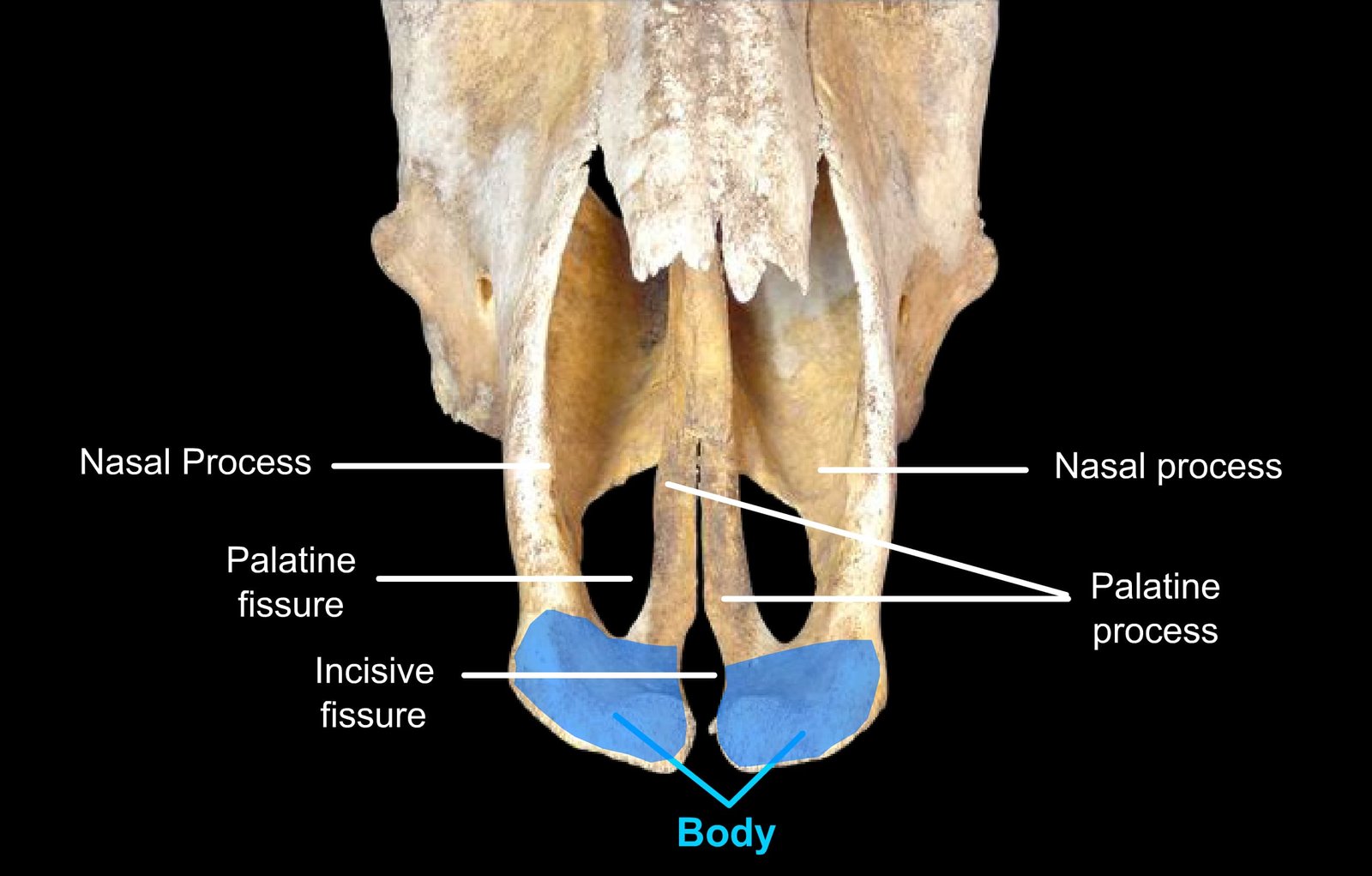
The lateral surface of the body is convex and related to the upper lip. The buccal surface is concave and related to the dental pad.
The medial border is concave and, together with its fellow, forms the incisive fissure.
The nasal process projects upward from the body and forms the lateral wall of the nasal cavity. The lateral (facial) and medial nasal surfaces of this process are smooth. Its posterior two-thirds fit into the groove on the anterior border of the body of the maxilla.
The palatine process is smaller than the nasal process. It is a thin plate of bone that forms the anterior part of the bony palate. Its nasal surface slopes medially and, together with its fellow, forms a groove for the vomer and nasal septum. The lateral border of the palatine process is separated from the nasal process and the maxilla by a large oval opening called the palatine fissure.
Premaxilla Bone of Horse
In the horse, the bodies of the two bones are fused together. The body of each bone is thicker and presents three alveoli for the upper incisors.
The medial surface is rough and articulates with the opposite bone. It presents a groove that, together with a similar groove on its fellow, forms the incisive foramen.
The nasal process is longer and presents an alveolus for the canine tooth at its junction with the maxillary bone.
The palatine process is wide, and the palatine fissure is narrow.
Premaxilla Bone of Dog
In the premaxillary bone of the dog, the body presents three alveoli for the incisors and, together with the maxillary bone, forms an alveolus for the canine tooth.
The incisive foramen is very small. The palatine fissure is short but wide.
Premaxilla Bone of Fowl
The premaxilla of the fowl forms the skeletal framework of the upper portion of the beak and fuses to form a solid bone before hatching.
It forms the anterior boundary of the external opening of the nasal cavity.
The premaxilla presents three pairs of processes: the palatine processes, which articulate with the palatine bones; the maxillary processes, which extend backward and articulate with the maxillae; and the nasal processes, which extend dorsally and backward along the median line between the nasal bones and articulate with the frontal bones.