Nasal Bone of Ox, Horse, Dog and Fowl
The nasal bones are paired facial bones that form the roof of the nasal cavity and contribute to the shape and structure of the face in domestic animals. Their size, shape, and anatomical features vary among species according to functional and structural adaptations.
Nasal bone anatomy is important during dehorning injuries, sinus surgeries, and radiographic interpretation in veterinary practice.
Ox
The nasal bones of the ox are elongated, curved plates situated in front of the frontal bones and form the greater part of the roof of the nasal cavity. They do not fuse laterally with the adjacent bones, even in old age.
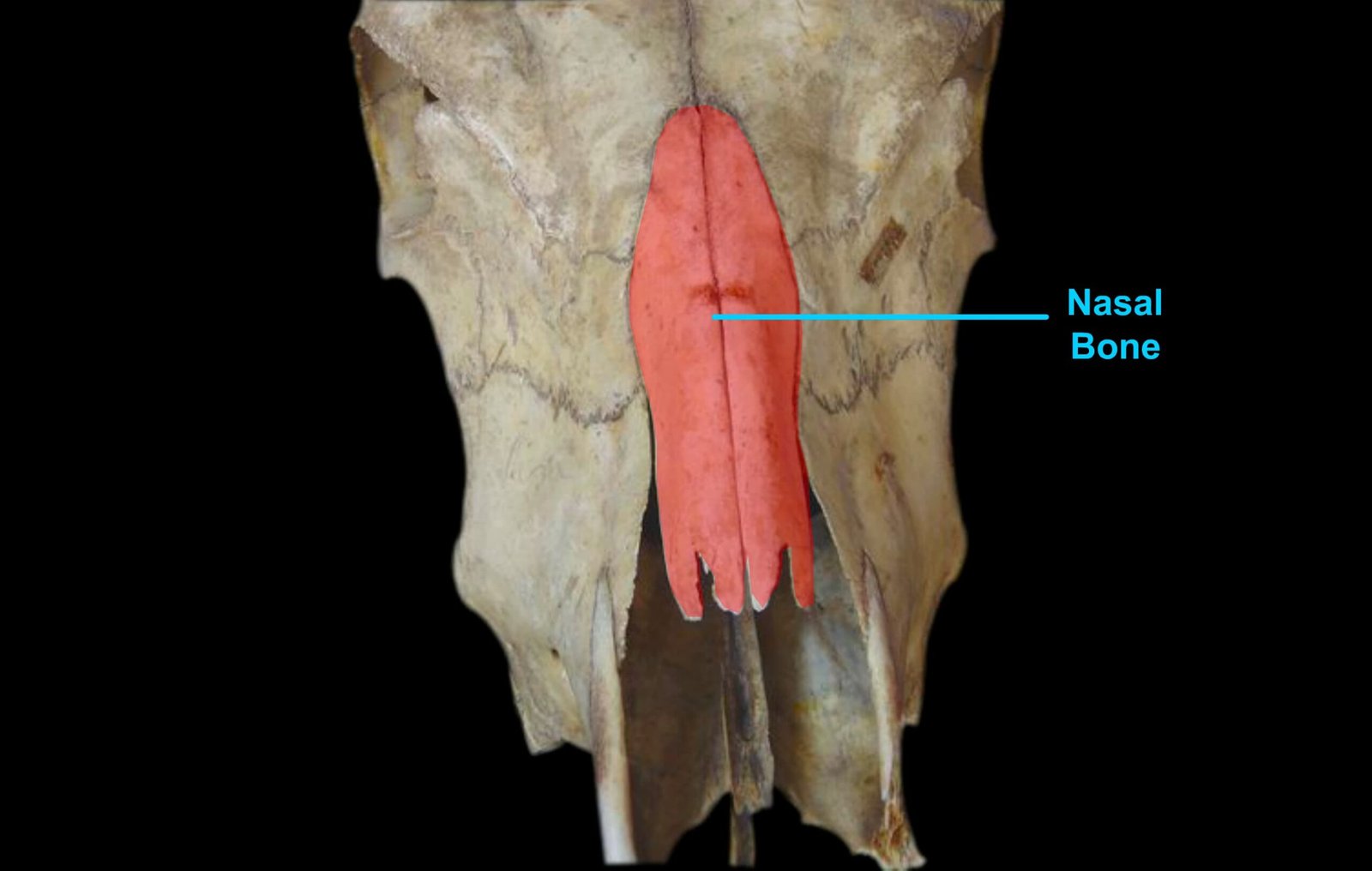
The dorsal facial surface is convex, whereas the ventral nasal surface is concave. Its medial half forms the dorsal meatus, and immediately below it is the dorsal turbinate crest for the attachment of the dorsal turbinate bone.
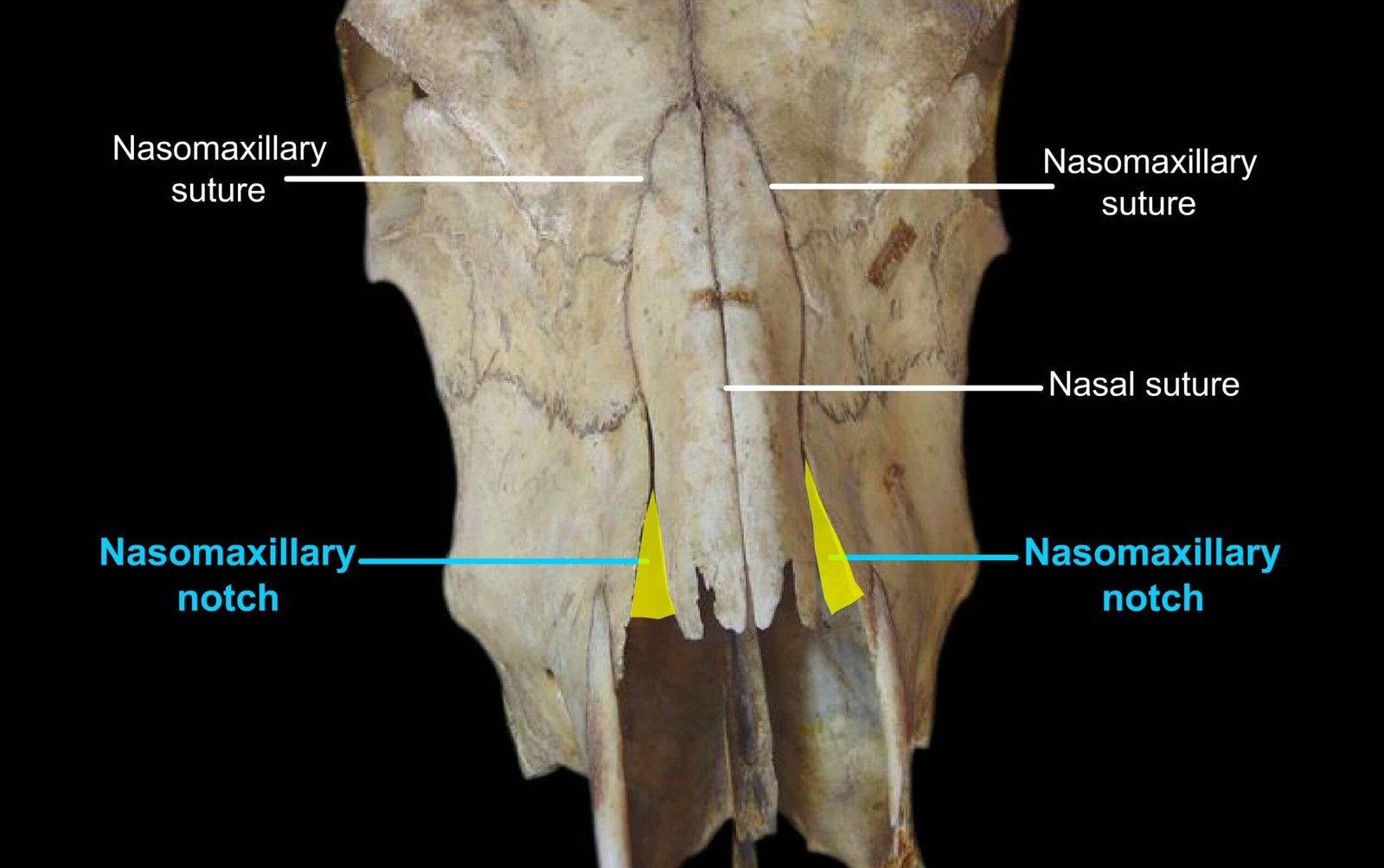
The extreme posterior part is slightly excavated in old animals. The lateral border is free and forms the nasomaxillary notch with the premaxilla. The posterior extremities of the two bones together form a projection that fits into the notch formed by the anterior ends of the frontal bones.
The anterior end presents two processes separated by a notch, and the anterior ends of the two bones together give a trifid appearance.
Horse
The posterior ends of the two bones together form a notch into which the pointed anterior ends of the frontal bones are received, and they are excavated to form part of the frontal sinus. The anterior end is pointed in the nasal bone of the horse.
Dog
The nasal bone of the dog is long and wider anteriorly than posteriorly. The dorsal surface is concave along its length and forms a central groove with its fellow bone. The medial borders project into the nasal cavity to form the internal nasal crest. The posterior ends resemble those of the ox. The anterior ends form a semicircular notch.
Fowl
The nasal bone of the fowl is a small, thin plate consisting of a body and three processes: frontal, premaxillary, and maxillary. These processes, together with the premaxilla and maxilla, circumscribe the anterior nares.